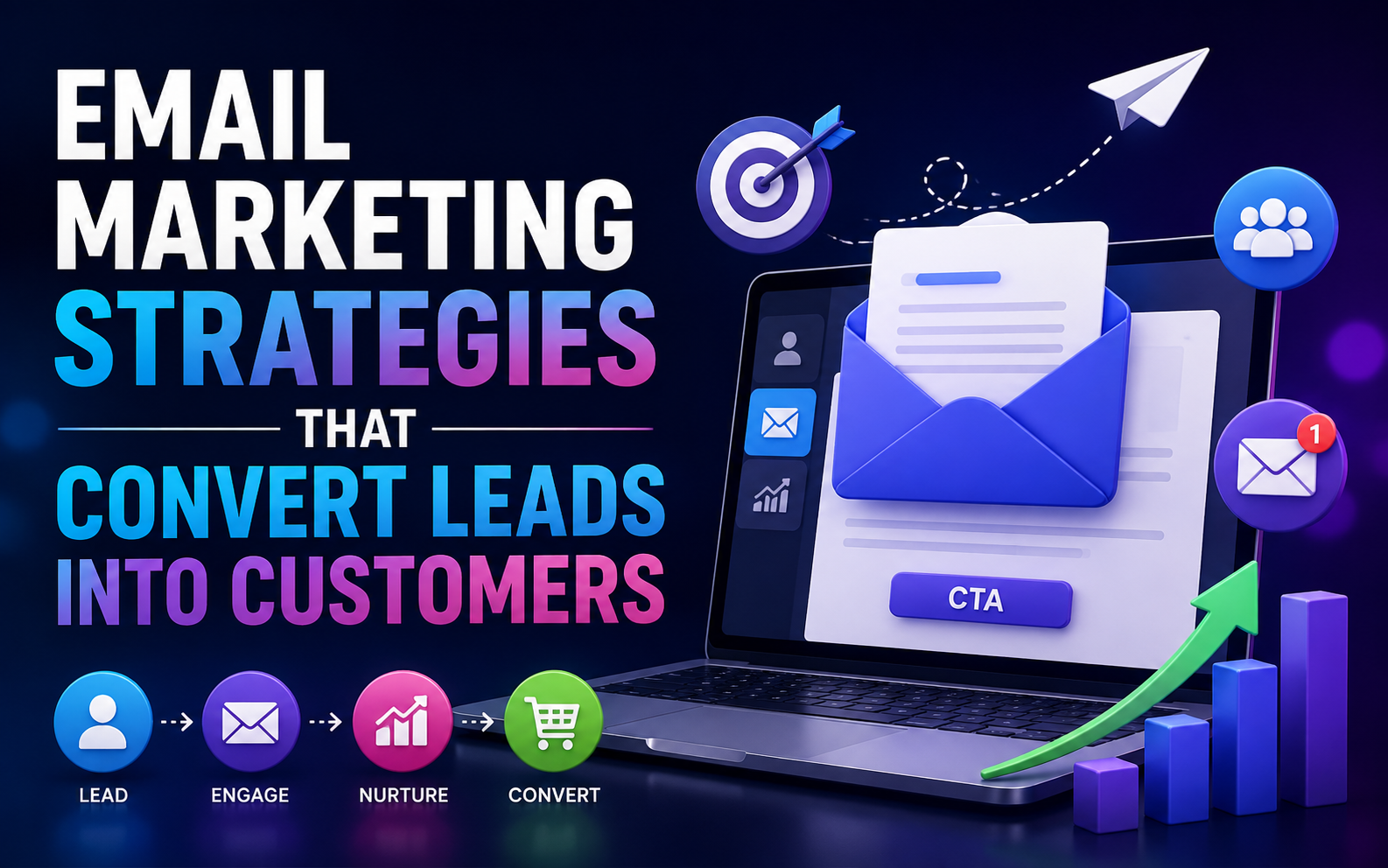
Email Marketing Strategies That Convert Leads into Customers
.

.
Whenever a new batch starts at Digitalgurukul, I ask students which digital marketing channel they think is the "oldest" or least exciting. Email Marketing almost always comes up. And every single time, I get to watch their surprise when I show them the actual numbers — email consistently delivers one of the highest returns of any marketing channel, often outperforming social media and paid ads in terms of ROI.
The truth is, email marketing isn't outdated — it's just widely misunderstood and, honestly, often poorly executed. Most businesses send generic newsletters and wonder why nothing converts. Let's break down what actually works when it comes to turning leads into paying customers through email.
Email marketing is about using email to make friends with people who might want to buy from you and people who already buy from you. You use email to talk to them and help them over time so they will do what you want them to do like buy something. You get to talk to them without relying on some other company's rules.
This is important because when you have an email list it is really yours. You do not have to worry about some company changing the rules like they do on social media. In the media the rules can change and you might not be able to reach all of your customers.. With email you can always reach the people on your list no matter what. This makes email marketing a good thing to have as part of your Digital Marketing plan.
Before getting into what works, it's worth understanding why so many businesses see poor results from email:
Strong Email Campaigns don't happen by accident — they follow a clear structure built around genuine value and timing.
1. Start With a Goal for Each Email Campaign
Before you write anything, think about what you want this email campaign to do. Do you want to make people aware of something, get them to engage with you or get them to buy something? This will help you figure out how to sound, what to say and what to ask people to do at the end.
2. Write Subject Lines That Get People to Open the Email
The line of your email has one job: to get people to open it. If you make people curious, tell them something or show them why it matters to them they are more likely to open it. For example "3 mistakes that are losing you customers and how to fix them" is a subject line than something like "Newsletter Number 12".
3. Keep the Email Simple and Focused
Each email should be about one thing. If you try to talk about many things at once it gets confusing and people do not know what you want them to do. So try to keep it simple and focused on one thing, like one email campaign message or one offer.
4. Personalize Beyond Just the First Name
Just using someone's name at the start of the email is not enough. Real personalization is when you tailor the email campaign to what someone has done like what they clicked on or what they are interested in. This is way more important than using their first name.
5. Make Sure the Email Looks Good on Mobile Phones
Most people open their emails on their phones. So you should make sure the email campaign looks good on a screen. This means using paragraphs making it easy to read and having one big button that tells people what to do next. This works better, than trying to make it look like it does on a computer.
Lead Nurturing is where most of the real conversion work actually happens. Very few people buy immediately after their first interaction with a brand — email is what keeps that relationship warm until they're genuinely ready.
A simple, effective nurturing sequence often looks like this:
The key mistake beginners make here is skipping straight to step five without building any trust first. Nurturing takes patience, but it consistently converts better than aggressive, early selling.
Marketing Automation is what makes consistent, well-timed email nurturing realistically manageable at scale. Instead of manually sending every email, automation tools trigger emails based on specific actions or timelines — a new subscriber joining, a cart being abandoned, or a lead going inactive for a period of time.
Common, high-impact automation flows include:
Automation doesn't just save time — it ensures no lead falls through the cracks simply because no one remembered to follow up manually.
Beyond just open rates, a few metrics genuinely indicate how well your email marketing is converting:
I always tell students at Digitalgurukul that email marketing is not very effective when it is used alone. The businesses that get the results from email marketing are the ones that use it with other types of Digital Marketing. They use media and paid ads to get more people on their email list. They use SEO to create content that people trust. They use marketing automation to make sure everything works together smoothly.
At Digitalgurukul our Digital Marketing Course does not teach email marketing as a topic. We teach it with topics like lead generation and marketing automation and analytics and content strategy. This way students can see how email marketing fits into the process of talking to customers. When marketers understand how all these things work together they get better results from their email marketing. This is because each email they send is part of a plan, not just a random email. Digitalgurukul students learn that email marketing is most effective when it is used as part of a Digital Marketing strategy.
1. How often should a business send marketing emails?
There's no one-size-fits-all answer. Being consistent is key. A regular plan like once a week or every two weeks usually works better than sending at random times.
2. Is email marketing still effective in 2026?
Yes it continues to be one of the ways to get a strong return on investment. The reason is that businesses have control over their email list instead of relying on a platform's rules.
3. What's the difference between email campaigns and marketing automation?
Email campaigns are usually sent once or on a schedule to all people on the list. Marketing automation sends emails automatically when a person does something or when a certain time passes.
4. How long should a lead nurturing sequence be?
This depends on the business. How long the sales process takes. The best sequences usually have emails over a few weeks slowly building trust before making a direct offer.
5. What's an email open rate to aim for?
This changes depending on the industry but focusing on improving your past results by using better subject lines and dividing your list into groups is more important than trying to hit a general number.
Email marketing that actually turns people into customers is not about sending a lot of emails. It is about sending the message to the right person at the right time.
When you think about how to set up a campaign and really take care of the people who might be interested in what you have to offer and you use marketing automation in a way businesses that use email to build relationships with people do a lot better than those that just use it to try to sell things.
If you really want to get more people to buy from you you should think more about how you use email marketing. Most businesses do not think enough about email marketing. If you do, you will probably be happy with the results. Email marketing deserves thought because it can really help you get more customers from the people who are already interested in what you have to offer.

We are a leading AI Powered Digital Marketing & Data Science Institute in Uttam Nagar, Delhi. We provide 100% practical training in SEO, Google Ads, Social Media Marketing, Artificial Intelligence, and Automation tools to help students build high-income careers, freelancing skills, and business growth.