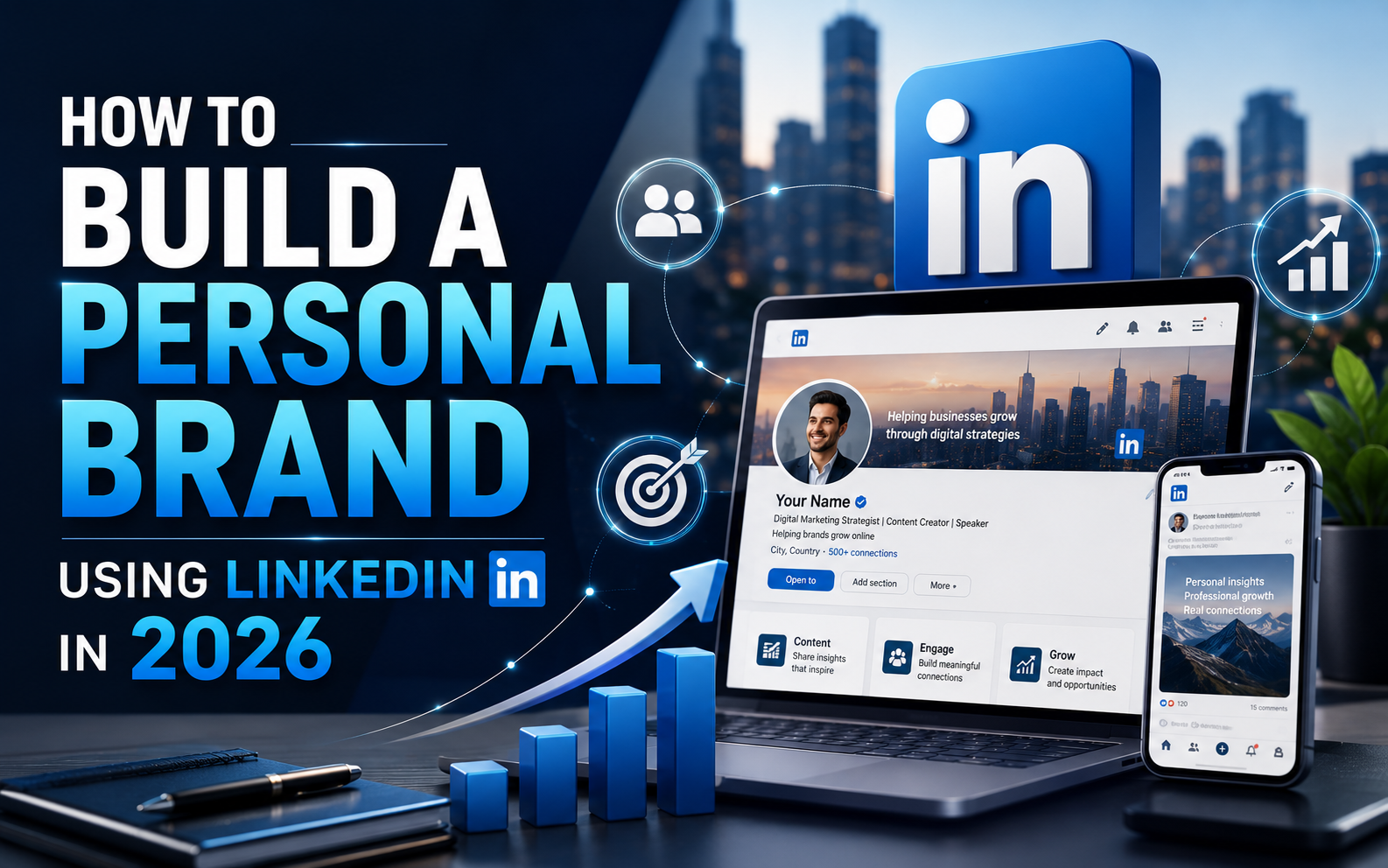
How to Build a Personal Brand Using LinkedIn in 2026
,
,
A year ago people thought of LinkedIn as a place to put your resume and wait for someone to notice you.. That has changed a lot. Now using LinkedIn for marketing is one of the ways to become well known, get more opportunities and build a good reputation. And I have seen this happen both as someone who does marketing and when I was teaching students at Digitalgurukul.
What people do not expect is that making a name for yourself on LinkedIn in 2026 is not just about having a lot of followers or getting a lot of attention. It is about doing things clearly and sharing things that are really useful to others. Let us go through the steps to do this the way.
Personal branding on LinkedIn is the way you show that you are someone who knows what they are talking about and that people can recognize your name in your area of work. This happens through your profile, the things you post and how you talk to others on the site. It's basically what people think about your skills and how well they know you before they ever speak to you directly.
It is important because LinkedIn is now often the place people look when they are thinking about hiring someone, working with someone or doing business. A bad or not active profile can stop you from getting chances even if you are really good at what you do. That's because there is no sign of your skills, for someone who sees your name as they scroll through.
Before creating content, your LinkedIn Profile itself needs to reflect the brand you're trying to build. A few often-overlooked details make a real difference:
One mistake people make when they are just starting out is talking about everything they can think of thinking that something will work out. A better way to do things is to pick a things that you really know about and stick to those. Like something you are really good at things you have learned from your own experiences or things that are happening in your line of work.
This is how people start to recognize you over time. When you keep talking about the things people start to think of you as the person who knows about those things. You become the person people think of when they think of your core themes like the things you're really good, at the things you have learned or the things that are happening in your line of work.
Here's what tends to genuinely work on LinkedIn, based on patterns I've seen consistently across successful profiles:
Networking on LinkedIn in 2026 isn't about collecting connection numbers — it's about building genuine relationships that lead somewhere. A few practical habits that actually help:
The strongest professional opportunities I've seen — for myself, colleagues, and students — rarely came from cold outreach alone. They came from consistent, genuine visibility built over time.
Consistency doesn't mean posting daily forever. It means choosing a realistic rhythm — even two to three thoughtful posts a week — and sticking with it long enough for people to notice a pattern. Personal branding is a compounding effort; the results often feel slow at first and then noticeably faster after a few consistent months.
Here's something I always tell students at Digitalgurukul: personal branding on LinkedIn rarely works best in isolation. The professionals seeing the strongest results are usually the ones connecting their LinkedIn presence to a broader Digital Marketing skill set — understanding content strategy, audience psychology, analytics, and even basic SEO principles to make their profile and posts genuinely discoverable and effective.
This is exactly why our Digital Marketing Course at Digitalgurukul doesn't treat platforms like LinkedIn as a standalone topic — it's taught alongside SEO, social media strategy, content creation, and analytics, so students understand how personal branding fits into a bigger, more sustainable career or business strategy rather than existing as an isolated skill. The professionals who understand this full picture tend to build both stronger personal brands and stronger, more well-rounded careers.
1. How often should I post on LinkedIn to build a brand?
I think you should post on LinkedIn a few times a week to build a brand. Two to three posts a week is a number. These posts should be thoughtful and consistent. This way you can build recognition without getting tired.
2. Do I need a following to build a strong personal brand on LinkedIn?
No you do not need a following to build a strong personal brand on LinkedIn. What you need is a group of people who are really interested in what you have to say and are related to your field. This is much better than having a lot of people following you who do not really care.
3. What kind of content performs best on LinkedIn?
On LinkedIn people like to read stories that teach them something. They also like posts that have ideas and are backed up by data or real life examples. These types of posts do better than posts that just give advice or are reposts of what someone else said.
4. How long does it take to build a personal brand on LinkedIn?
This takes time. You will not see results away.. If you keep posting good content and talking to people on LinkedIn you will start to see results after a few months. You have to be patient and keep working at it.
5. Is LinkedIn only useful for job seekers?
No, LinkedIn is not just for people looking for a job. It is also very useful for people who work for themselves, their own businesses and professionals who want to be known as experts in their field. These people can use LinkedIn to attract clients, grow their network and build their reputation.
Building a brand on LinkedIn in 2026 is not about trying to get a lot of attention or figuring out how to trick the system. It is about showing up all the time with ideas that're real and talking to people in a genuine way. When you do this people start to see that you are really good at what you do.
Having a LinkedIn Profile writing things that are worth reading and actually talking to people on the site and doing all of this all the time will help you get chances that you would not get if you just had a profile and did not use it.
If you really want to make an impression as a professional in 2026 you should use LinkedIn all the time, not just when you need to update your resume. You should think of LinkedIn as a part of your plan, for your career and how you present yourself online. What you get out of LinkedIn is what you put into it.
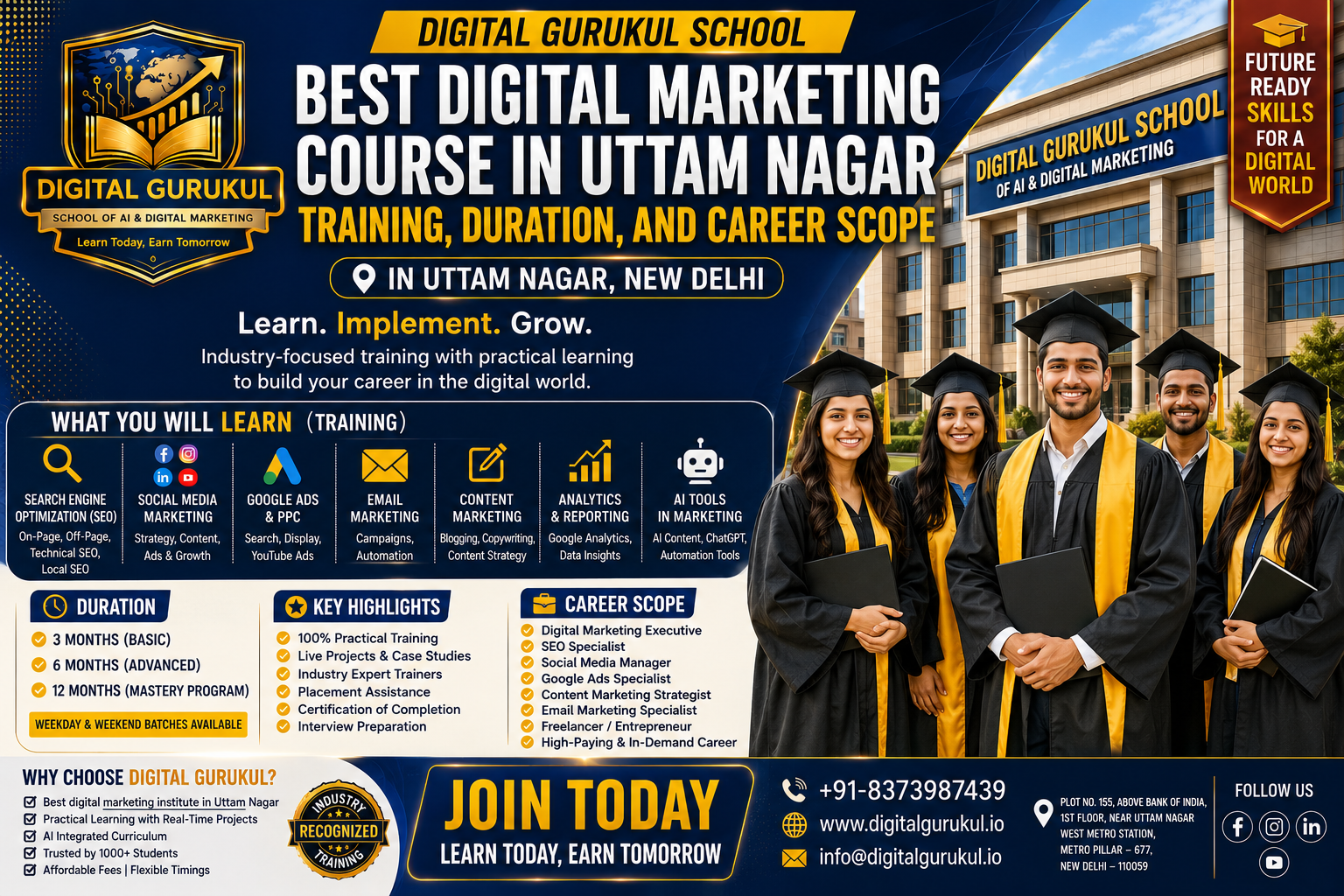
We are a leading AI Powered Digital Marketing & Data Science Institute in Uttam Nagar, Delhi. We provide 100% practical training in SEO, Google Ads, Social Media Marketing, Artificial Intelligence, and Automation tools to help students build high-income careers, freelancing skills, and business growth.