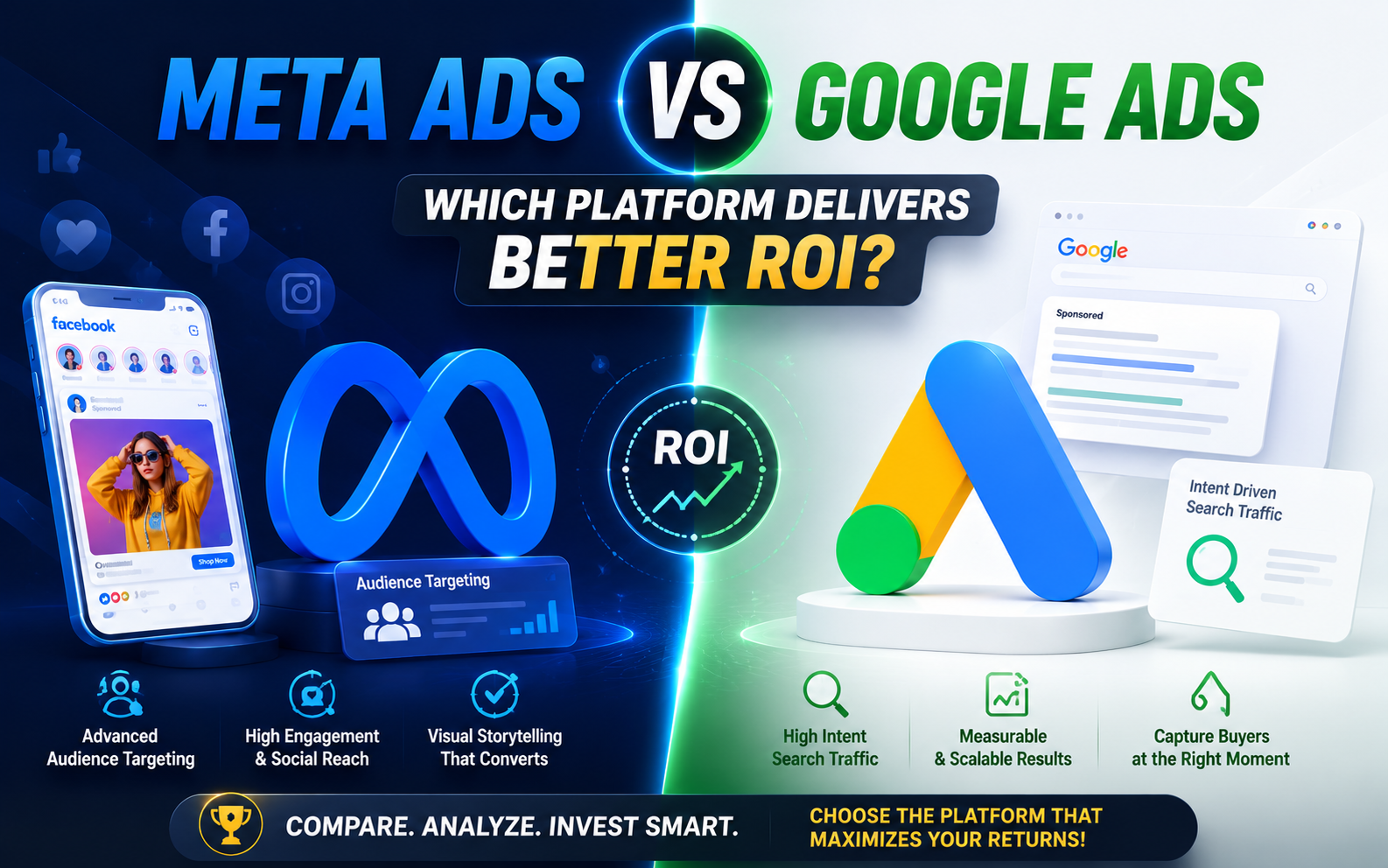
Meta Ads vs Google Ads: Which Platform Delivers Better ROI?
.

.
I get asked this question a lot whether it is from someone who owns a business and is planning their ad budget or a student who is learning about Paid Advertising for the first time. The question is always the same: Should I run Meta Ads or Google Ads?
The answer is that it really depends on what Meta Ads and Google Ads are being used for who the ads are targeting and what point the business is at. There is no one size fits all answer to this question. Meta Ads and Google Ads are different. Which one is better really depends on the situation. Let us look at Meta Ads and Google Ads so we can figure out which one is the choice for our specific situation and make a decision, with confidence instead of just guessing about Meta Ads and Google Ads.
The core difference comes down to intent versus interest.
Google Ads is really good at finding people who are looking for something. When people search for things like " digital marketing course near me" on Google they are looking for it right now. So your Google ad just needs to be when they search for it.
Meta Ads, which includes Facebook Ads and Instagram Ads is different. It is about showing ads to people based on what they like and what they do. When people use Facebook or Instagram they are not usually looking for something. They are just scrolling through. Looking at things. So your Meta ad needs to catch their eye and make them interested in something they were not thinking about a second before. Google Ads and Meta Ads are used for things. Google Ads is for people who are searching for Google Ads. Meta Ads is for people who use Facebook and Instagram.
This one distinction shapes almost everything else about how each platform performs.
Google Ads primarily operates on a search and display network, showing ads based on keywords people search for, along with placements across websites, YouTube, and apps through its display network.
Strengths of Google Ads:
Limitations of Google Ads:
Meta Ads run across Facebook and Instagram, using detailed audience targeting based on demographics, interests, behavior, and lookalike audiences built from your existing customers.
Strengths of Meta Ads:
Limitations of Meta Ads:
Here's where I'll be direct, based on real campaign experience rather than textbook theory: neither platform is universally "better" for ROI. It genuinely depends on the business model.
A pattern I've seen repeatedly with students and clients: businesses that only use one platform are usually leaving performance on the table. The strongest results almost always come from using both platforms strategically, rather than picking one as a permanent winner.
If you're unsure where to start, here's a simple way to think about it:
I have seen that using Meta Ads is a good way to get people to know about something and get them interested. Then you can use Google Ads to catch the people who are actually looking for the brand or product.
This way of doing things usually works better than using one platform. It works because it covers the process of buying something. First you get people interested and then you catch them when they are ready to buy the brand or product.
1. Which platform is cheaper to use for advertising Meta Ads or Google Ads?
Meta Ads usually cost less to get started with for people who do not have a lot of money to spend on advertising while the cost of Google Ads can be very different depending on how many people are trying to advertise using the same keywords.
2. Can small businesses make money from using Google Ads?
Yes small businesses can make money from Google Ads especially when they use searches and focus on specific keywords that are not too competitive.
3. Do Instagram Ads and Facebook Ads perform differently?
Instagram Ads and Facebook Ads use the Meta Ads system but Instagram Ads often work better for younger people who like looking at pictures and videos while Facebook Ads can work well for older people or for ads that are not just about pictures.
4. Should a new business start with Meta Ads or Google Ads?
It depends on if people're already searching for the product online. If the product is new and people do not know about it, Meta Ads can be a way to tell people about it first.
5. Is it necessary to use both Meta Ads and Google Ads at the time?
No, it is not necessary to use both. Using both Meta Ads and Google Ads can help a business make more money in the long run by helping people become aware of the product and also by reaching people who are already looking for something like it.
The thing about Meta Ads and Google Ads is that it is not really about which one is better. It is about knowing the people who buy your stuff, what you are selling and where they are when they are thinking about buying something. Google Ads is good for people who already want to buy something. Meta Ads are good for getting people interested in something when they were not thinking about it before.
The people who do well with Digital Marketing and Paid Advertising are not the ones who jump from one thing to another. They are the ones who really know what their customers want and need. They know when to use Meta Ads and when to use Google Ads to sell their stuff. They have a plan. They know what they are doing with Meta Ads and Google Ads.

We are a leading AI Powered Digital Marketing & Data Science Institute in Uttam Nagar, Delhi. We provide 100% practical training in SEO, Google Ads, Social Media Marketing, Artificial Intelligence, and Automation tools to help students build high-income careers, freelancing skills, and business growth.